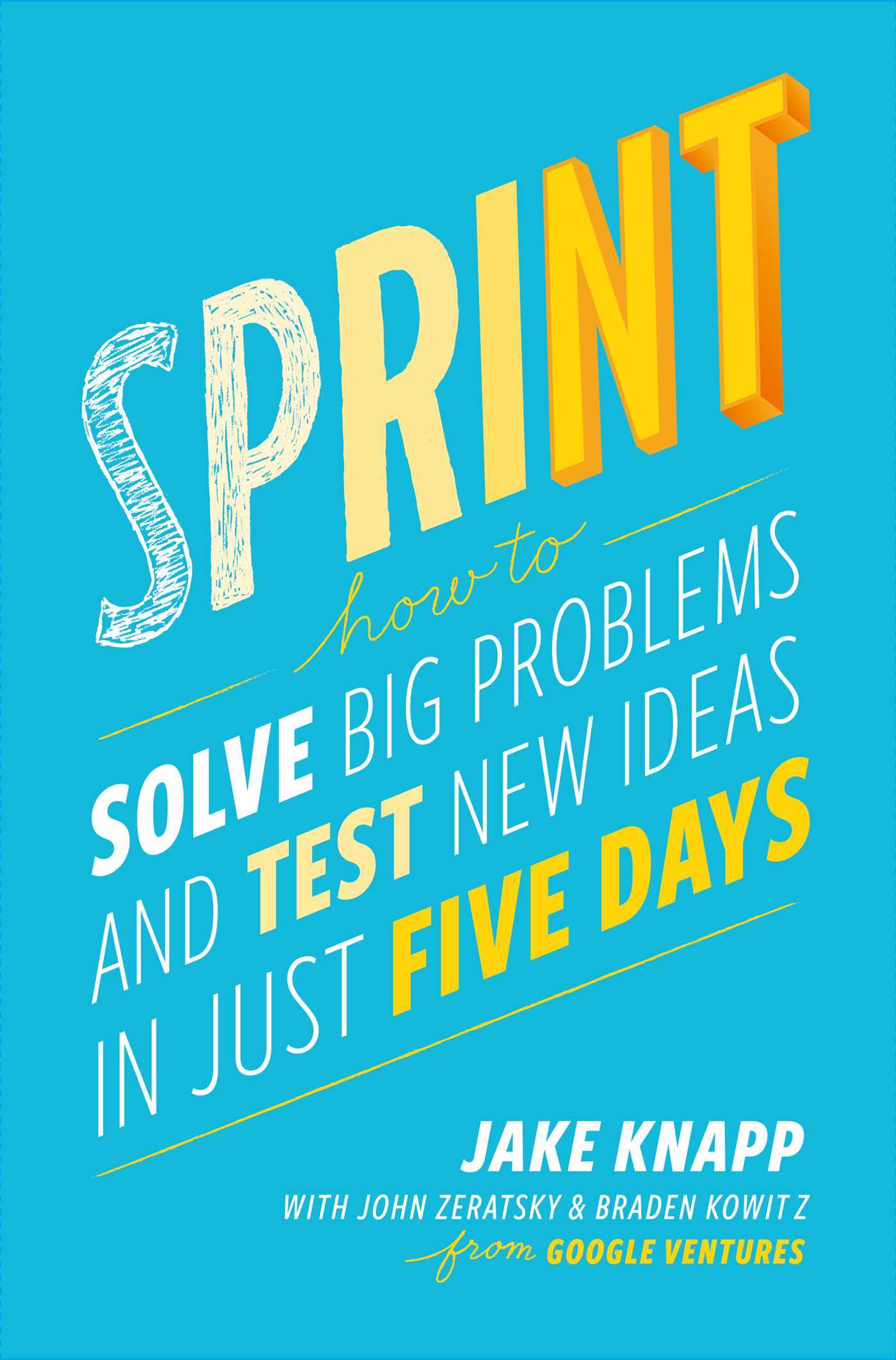
Sprint: How to Solve Big Problems and Test New Ideas in Just Five Days
Jake Knapp
4.18 average rating, · 23.7k ratings
Decision Quality & Judgment
A tightly scoped thirty-book curriculum on creative problem-solving, design methods, innovation, scientific discovery, and choosing worthwhile ideas.
30 Books on Creative Problem Solving, Innovation, and Choosing What to Build is an integrated curriculum built for readers whose work crosses conventional subject boundaries.
The collection focuses on Creative Problem Solving, Innovation, and Choosing What to Build brings together established books on creative problem-solving, design methods, innovation, scientific discovery, and choosing worthwhile ideas. Each source field already supports a strong body of books, allowing the combined page to remain useful without inventing a category that the catalogue cannot sustain.
The list is capped at thirty books. The aim is a navigable professional curriculum, not a long page padded with increasingly weak matches.
Ranked 1–24 of 30 — curated order, not the site-wide popularity formula.
Jake Knapp
4.18 average rating, · 23.7k ratings
Real professional problems rarely remain inside one discipline. Understanding Creative Problem Solving, Innovation, and Choosing What to Build brings together established books on creative problem-solving, design methods, innovation, scientific discovery, and choosing worthwhile ideas requires readers to connect technical, organizational, historical, and human perspectives while still maintaining a coherent path through the literature.
Books were drawn in balanced rank order from these prior curated source lists: SCI-107, BUS-007, INS-104. This improves fit by building only from established, catalogue-grounded lists. Final human review is still required.
The books come from previously curated, catalogue-grounded lists, but the new combination and ranking still require human review before publication. Topreads does not claim every title has been personally read cover to cover.
Spotted a book that doesn't belong here? Tell us — lists are reviewed and corrected.
Clayton M. Christensen
4.03 average rating, · 62.1k ratings
Vijay Kumar
4.05 average rating, · 703 ratings
Walter Isaacson
4.12 average rating, · 40.3k ratings
John Gribbin
4.11 average rating, · 1.3k ratings
Anthony W. Ulwick
4.03 average rating, · 618 ratings
Teresa Torres
4.43 average rating, · 4.9k ratings
Kevin Ashton
4.01 average rating, · 2.2k ratings
Jon Gertner
4.21 average rating, · 9.2k ratings
Robert Jungk
4.30 average rating, · 648 ratings
Matt Ridley
4.11 average rating, · 3.6k ratings
Jim McKelvey
4.22 average rating, · 1.8k ratings
Ajay Agrawal
4.21 average rating, · 7.4k ratings
Richard Dawkins
4.11 average rating, · 9.7k ratings
Madhavan Ramanujam
4.15 average rating, · 1.3k ratings
Jessica Wapner
4.28 average rating, · 1.1k ratings
A tightly scoped thirty-book curriculum on critical thinking, forecasting, research methods, causal inference, statistics, and evidence-based decision-making.